How Plants Are Helping Our Patients Heal: Inside iKare's Hydroponic Garden Program
How Plants Are Helping Our Patients Heal: Inside iKare's Hydroponic Garden Program
By the iKare Mood Trauma Recovery Clinic Team | San Antonio, TX
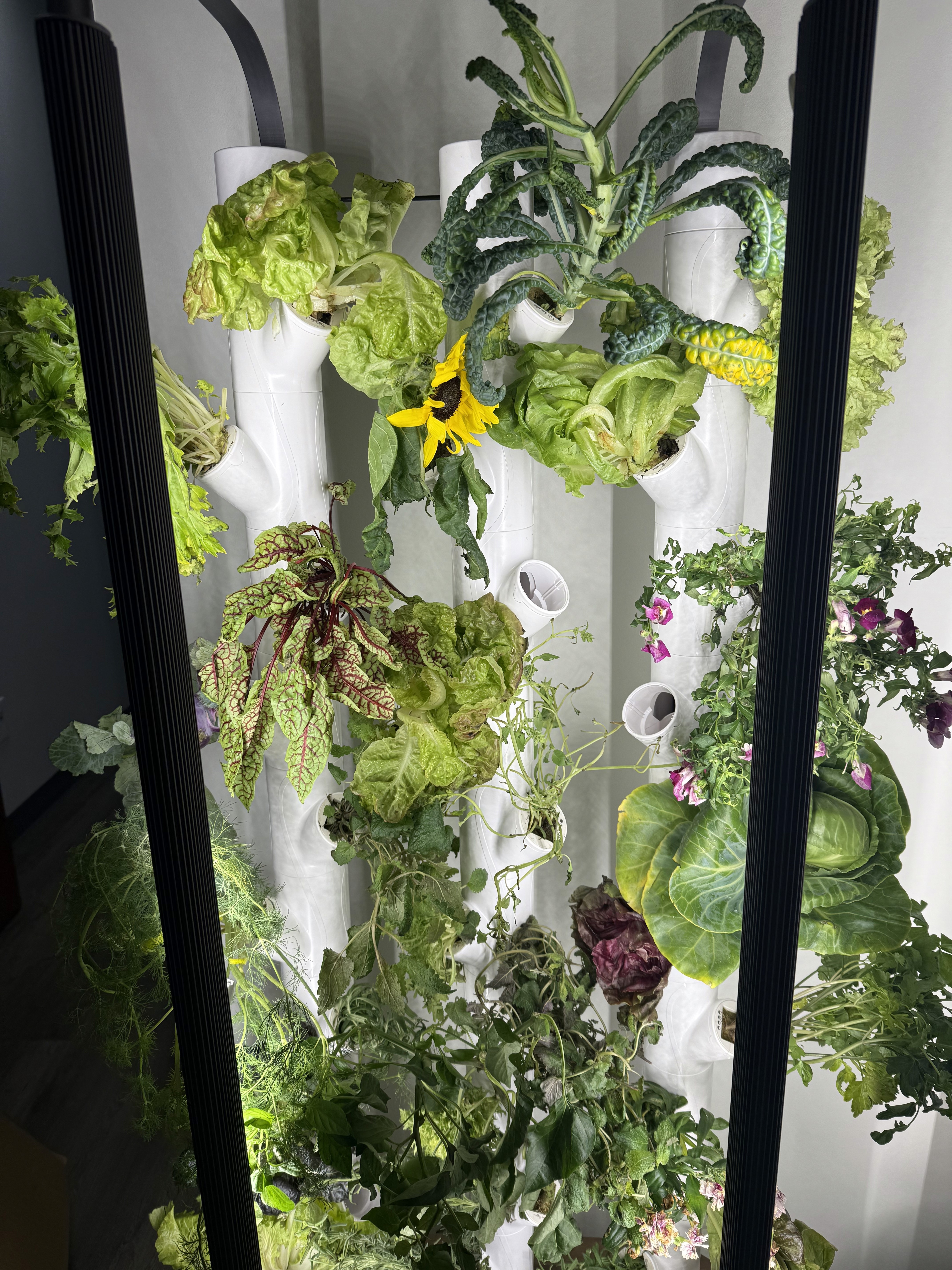
When you walk into iKare Mood Trauma Recovery Clinic, one of the first things you'll notice isn't a piece of medical equipment — it's a living, growing wall of greens. Lush herbs, leafy vegetables, and vibrant seedlings climb vertical hydroponic towers in our patient-facing areas, tended by our staff and quietly doing something remarkable: helping our patients feel better.
We've long believed that the environment of healing matters just as much as the treatment itself. Now, we have data to back that up.
What Is Biophilic Design — and Why Does It Matter for Mental Health?
Biophilic design is the intentional integration of nature into built environments to support human wellbeing. The concept is rooted in the biophilia hypothesis — the idea that humans have an innate, evolved connection to living systems and the natural world.
This isn't just philosophy. Decades of research show that exposure to nature — even indoors, even passively — triggers measurable psychological benefits. Two well-established theories explain why:
Stress Reduction Theory (SRT): Natural stimuli activate an almost automatic calming response, helping the nervous system recover from stress.
Attention Restoration Theory (ART): Nature gently captures our attention without effort, giving the mind a chance to rest and recharge.
These effects have been documented in hospital rooms, outpatient clinics, and psychiatric settings. In one landmark study, patients recovering from surgery in rooms with a window view of trees required fewer pain medications, had shorter hospital stays, and received fewer negative nursing notes compared to those with a view of a brick wall.
But what about patients with treatment-resistant depression (TRD) — one of the most challenging populations in all of psychiatry?
That's exactly the question we set out to explore at iKare MTRC.
Why iKare Patients Are Uniquely Positioned to Benefit
Patients receiving treatment for treatment-resistant depression don't just visit our clinic once a month. They're here — often daily, or multiple times a week.
Consider the time involved:
Spravato (esketamine) is administered twice weekly during induction, with a mandatory two-hour observation period after each session.
Ketamine infusions require comparable in-clinic windows.
rTMS (repetitive transcranial magnetic stimulation) typically involves five sessions per week for approximately six weeks.
Over a full course of treatment, a single patient may spend dozens of hours inside our clinic. That means the quality of our clinic environment — the light, the atmosphere, the living things within it — is not a minor detail. It's a meaningful part of the therapeutic experience.
This is why we made a deliberate investment in Gardyn hydroponic vertical gardens: compact, soil-free indoor growing systems that cultivate fresh herbs and vegetables year-round under LED light. They require minimal maintenance, fit naturally into a clinical environment, and — as it turns out — have a profound impact on how our patients feel.
What Our Patients Told Us: The Survey Results
We conducted an anonymous survey of 39 adult outpatients at iKare MTRC — all of them living with treatment-resistant depression and receiving Spravato, ketamine, or rTMS. Each had been exposed to our Gardyn installations across multiple visits.
The results were striking.
Emotional and Clinical Wellbeing
What Patients Reported | Agreement |
The Gardyns improved my emotional balance | 82% |
The Gardyns helped reduce my anxiety | 82% |
I have fewer feelings of depression near the Gardyns | 74% |
The Gardyns augmented the mental-health benefits of my treatment | 72% |
Watching the plants grow supports reflection on my own recovery | 69% |
More than three out of four patients reported that being near the hydroponic gardens helped them feel more emotionally balanced and less anxious — even within a population for whom standard antidepressants have already failed.
Treatment Engagement
The Gardyns didn't just make patients feel better in the moment. They influenced how patients felt about coming to treatment at all.
71% said the presence of the Gardyns increased their motivation to attend clinic appointments.
75% expressed interest in receiving a "prescription" for a home Gardyn system.
71% said they would be interested in a form of psychotherapy built around plants and their natural beauty.
57% said they'd be willing to help care for the clinic's Gardyns themselves.
In a population where fatigue, low motivation, and withdrawal from daily life are core symptoms, a majority of patients saying that plants increased their desire to show up for treatment is remarkable.
The Gift of Clinic-Grown Produce
A subset of 14 patients had received fresh vegetables or herbs harvested from our clinic Gardyns by staff members. Among them, 78% reported feeling special as a result of receiving the produce.
That's the highest endorsement of any item in the entire survey.
There's something meaningful in that. Being handed something real, living, and edible — grown right here, in this clinic, by people who care about your recovery — carries a quiet therapeutic weight that's hard to quantify but impossible to ignore.
The Science Behind What We're Seeing
Our findings are consistent with a growing body of research on horticultural therapy and biophilic interventions in mental health settings:
A 2024 systematic review and meta-analysis found that social and therapeutic horticulture significantly reduced symptoms of depression and anxiety in adult participants.
A 2025 pilot study with cancer patients found that an eight-week indoor hydroponic gardening program produced steady improvements in mental wellbeing, depressive symptoms, and quality of life.
A 2024 randomized controlled trial in psychiatric inpatients found meaningful clinical benefits from horticultural therapy programs.
What makes the hydroponic format particularly well-suited to clinical settings is its practicality: no soil, low water use, automated lighting, and consistent productivity throughout the year — even in an indoor clinic in San Antonio.
More Than Decoration: Plants as a Metaphor for Recovery
One of the most meaningful findings in our survey was item five: 69% of patients said that watching the plants grow from seedlings supported their reflection on their own mental-health revival and positive life changes.
That response points to something deeper than aesthetics. The Gardyn systems don't just add visual warmth to our space — they offer patients a living, growing metaphor for what they themselves are going through.
A seedling that struggles toward light. Roots that quietly strengthen beneath the surface. A harvest that takes time, patience, and care.
For patients in the middle of a long, hard fight with treatment-resistant depression, watching something grow — and knowing they're growing too — may be genuinely therapeutic in a way that a poster or a painting simply cannot replicate.
What's Next: Expanding the Program
iKare MTRC and Gardyn, Inc. are now collaborating on two exciting extensions of this work:
1. Plant-Centered Psychotherapeutic Workbooks
We are co-developing a series of workbooks that map the Gardyn growth cycle — seedling to harvest — onto structured therapeutic exercises in self-monitoring, behavioral activation, meaning-making, and reflective journaling. These workbooks are designed specifically for use during the long observation windows after Spravato or ketamine treatment, and during daily rTMS sessions.
2. Home Gardyn "Prescriptions" — A Controlled Study
Building on the 75% interest in a home system, we are planning a controlled study in which patients with TRD receive a Gardyn unit for their home, alongside structured guidance. The hypothesis: a living, growing system in the patient's own environment can serve as a continuous "revival metaphor" — an externalized mirror of their own emerging mood recovery.
We'll be measuring validated outcomes including PHQ-9, GAD-7, treatment attendance, sleep, and qualitative patient reflections. Results will be published in subsequent peer-reviewed research.
Why This Matters for Interventional Psychiatry
At iKare, we treat some of the most complex and severe cases of depression, trauma, and mood disorders. Our patients have often been through years of treatment before finding us. They arrive carrying heavy burdens — and they spend real time in our space.
We believe that every element of the clinical environment is part of the therapeutic experience: the quality of the light, the warmth of our staff, the music playing softly in the background — and yes, the living plants growing quietly by the window.
The Gardyn program is one expression of a broader philosophy at iKare: that healing happens in relationship — with our clinicians, with evidence-based treatments like Spravato, ketamine, and rTMS, and with the environment we create together.
Ready to Experience Interventional Psychiatry Differently?
If you or someone you love is living with treatment-resistant depression, you don't have to keep trying treatments that haven't worked. iKare Mood Trauma Recovery Clinic in San Antonio offers advanced, evidence-based interventional treatments — including Spravato (esketamine), IV/IM ketamine, and rTMS — in a therapeutic environment designed to support healing in every dimension.
This post is based on a peer-reviewed survey study conducted at iKare MTRC, PLLC, San Antonio, TX. The full clinical report, authored by Eli Elias II, Kyle Johnston, MD, Melissa Davila, Frank Guillen LVN, Elian Vigil, Ana-Maria Aron, Iris Salgado, and Marlon Quinones MD, MS, is available through the R&D team at R&D@iKare.io.
Keywords: treatment-resistant depression San Antonio | Spravato clinic San Antonio | ketamine therapy San Antonio | rTMS treatment San Antonio | interventional psychiatry | biophilic design mental health | hydroponic therapy | iKare Mood Trauma Recovery Clinic