Transcranial Magnetic Stimulation (TMS) Therapy
Cost: $
-
Duration:
2 hour
Bipolar Disorder
Post Traumatic Stress Disorder
Depression
Our specialty
TMS therapy is one of the cornerstones of our practice. While many psychiatric clinics refer patients out for this treatment, we offer TMS in-house because we believe it deserves the same level of personalized, ongoing care as any other part of your treatment plan. Our team has extensive experience administering TMS and closely monitors your progress throughout every stage of your course, adjusting as needed and staying in close communication with you from your first session to your last.
Our clinic offers ketamine priming in combination with TMS, a cutting-edge protocol that most psychiatric practices do not provide. Ketamine is administered prior to TMS sessions to enhance the brain's neuroplasticity — essentially making the brain more receptive to the stimulation that follows. Early research suggests that this combination may produce faster response times, deeper symptom relief, and better outcomes for patients who have previously had limited success with TMS or medication alone. If you have tried TMS elsewhere without the results you hoped for, this may be the difference.
A Non-Medication Path to Lasting Relief
Transcranial Magnetic Stimulation (TMS) is an FDA-cleared, non-invasive therapy that uses focused magnetic pulses to stimulate areas of the brain involved in mood regulation. It is an excellent option for patients who have not found relief through antidepressants, want to reduce or avoid medication, or are looking for a well-tolerated outpatient treatment.
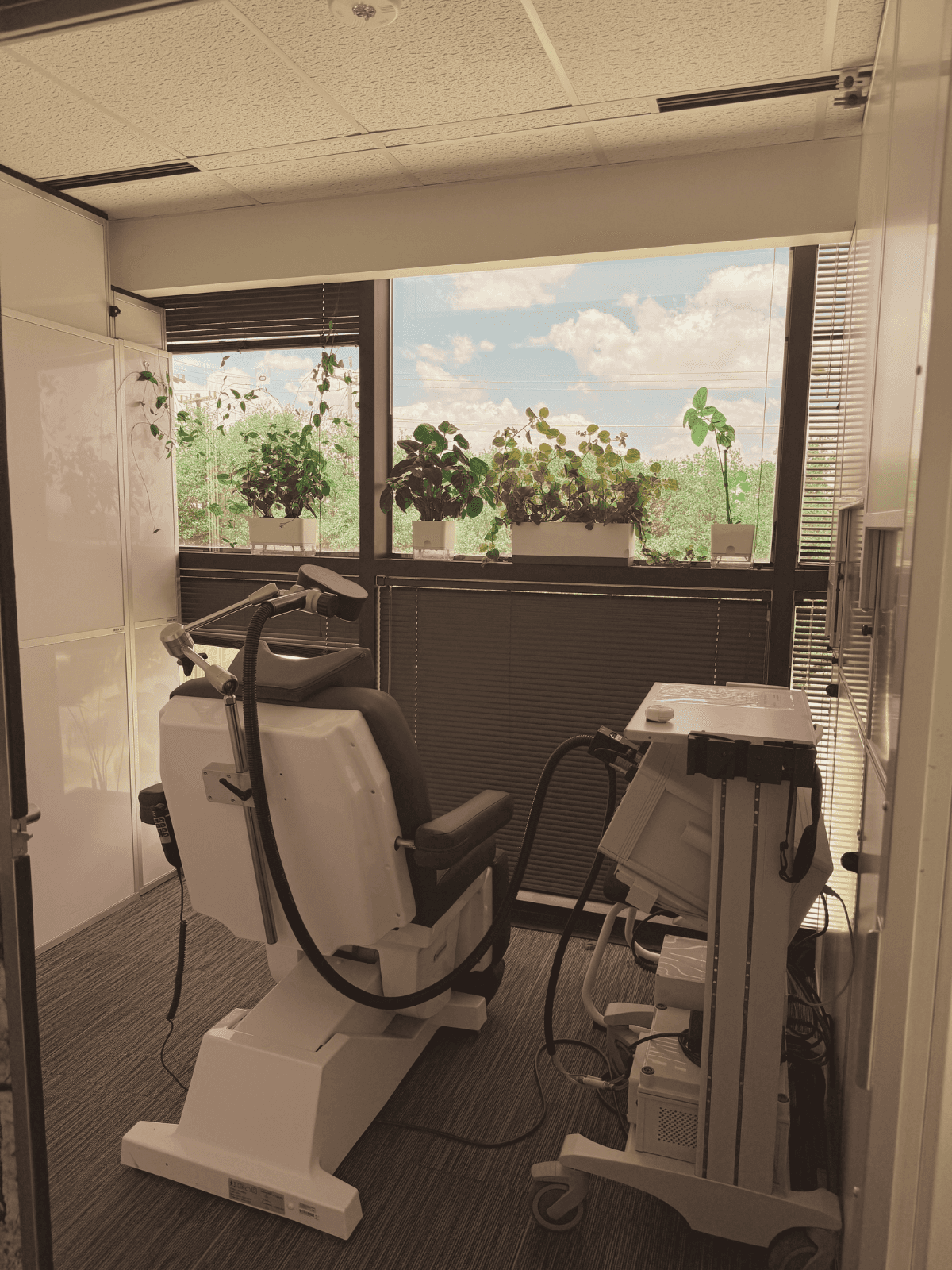
TMS is performed right here in our office. Each session takes approximately 20–40 minutes, and most patients complete a course of 36 sessions over 6–9 weeks. There is no anesthesia, no downtime, and patients can drive themselves home and return to normal activities immediately after.
How it works
A small electromagnetic coil is placed against the scalp near the forehead. It delivers short, painless magnetic pulses that activate nerve cells in the prefrontal cortex — the region of the brain most associated with depression and mood. Over the course of treatment, this stimulation helps restore normal brain activity patterns.
What to expect
Most patients begin noticing improvement around weeks 3–4, with continued gains through the end of the full course. Studies show that approximately 50–60% of patients experience significant symptom reduction, and roughly 1 in 3 achieve full remission.
Is TMS right for you?
TMS may be a good fit if you have been diagnosed with Major Depressive Disorder, PTSD, or bipolar depression and have tried at least one antidepressant without adequate results. Our team will conduct a thorough evaluation to determine whether TMS is appropriate for your situation after a prescreen.
Frequently Asked Questions
No. Most patients describe the sensation as a light tapping or knocking feeling on the scalp during the session. It is well-tolerated and does not require any sedation or anesthesia. You are fully awake and can resume normal activities immediately after.
Standard TMS sessions take approximately 20–40 minutes. You can drive yourself to and from appointments and return to work, school, or daily activities the same day.
A typical course consists of 36 sessions delivered over 6–9 weeks, usually 5 days a week. Your provider will outline a personalized schedule during your initial consultation.
TMS is covered by insurance providers when a diagnosis of Major Depressive Disorder has been established and at least one antidepressant medication has been tried without adequate results. Our team will verify your benefits before treatment begins.
Ketamine priming involves administering a low-dose ketamine infusion before TMS sessions to increase the brain's receptivity to stimulation. It is not required for everyone, but it may be recommended for patients who have tried standard TMS without sufficient results or who have a history of treatment-resistant depression. Your provider will discuss whether this protocol is right for you.
Most patients begin noticing improvement around weeks 3–4. The full benefit of TMS typically builds gradually over the entire course of treatment, with continued improvement even after sessions are complete.
No they are very different. ECT requires general anesthesia and induces a controlled seizure. TMS is non-invasive, requires no anesthesia, causes no seizure, and has no associated memory side effects. Many patients choose TMS specifically because it offers strong clinical results without the risks associated with ECT.
Many patients maintain their results for a year or longer. If symptoms begin to return, a shorter maintenance course can often restore the response. Your provider will work with you on a long-term plan after your initial course is complete.
See if you qualify for TMS.